

EN
In thin-walled packaging injection molding, temperature control is often underestimated. Many people focus on clamping force and injection speed, but overlook the impact of barrel temperature fluctuations on melt viscosity and filling stability. Thin-walled products have thin walls and cool rapidly; if barrel temperature fluctuates significantly, melt viscosity becomes unstable, affecting filling speed and product weight. Meanwhile, the packaging industry is highly sensitive to energy consumption per unit product, with heating energy accounting for a significant proportion of total injection molding machine energy costs. Therefore, the heating system and temperature control method often determine the long-term operating cost of the equipment.
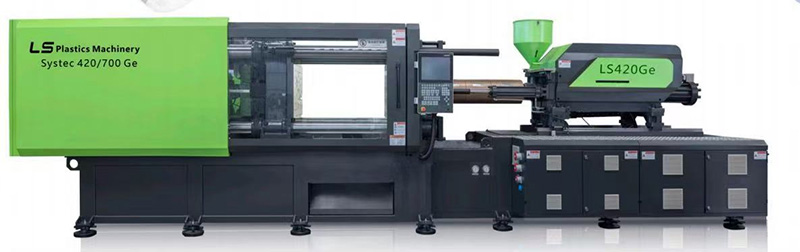
Lisong Precision's thin-walled packaging injection molding machines come standard with infrared nano-heating coils in their injection systems. One characteristic of these coils is rapid heating and good heat retention, reducing heat loss during the heating process. This results in energy savings exceeding 30%. From a third-party perspective, this data needs to be verified under specific production conditions, but the thermal efficiency advantage of infrared heating is relatively clear. Compared to ordinary ceramic heating coils, infrared nano heating coils have lower thermal inertia. Combined with closed-loop PID temperature control, this allows the temperature in each section of the barrel to more closely approximate the set value, reducing overshoot and temperature fluctuations. The significance of closed-loop PID temperature control lies in process stability. Thin-walled packaging often uses multi-cavity molds, requiring high uniformity of melt temperature. Large temperature fluctuations in any section can lead to inconsistent filling speeds in different cavities, resulting in short shots or flash. This machine emphasizes precise temperature control, which is beneficial for controlling scrap rates in continuous production. Especially when using a low-shear, high-mixing optimized screw, melt temperature uniformity is better, and combined with a stable heating system, it helps improve plasticizing quality and mixing effect. A large L/D ratio screw generally promotes complete plasticizing, the low-shear design helps reduce melt overheating, and the high-mixing section improves the dispersion of masterbatch and additives.
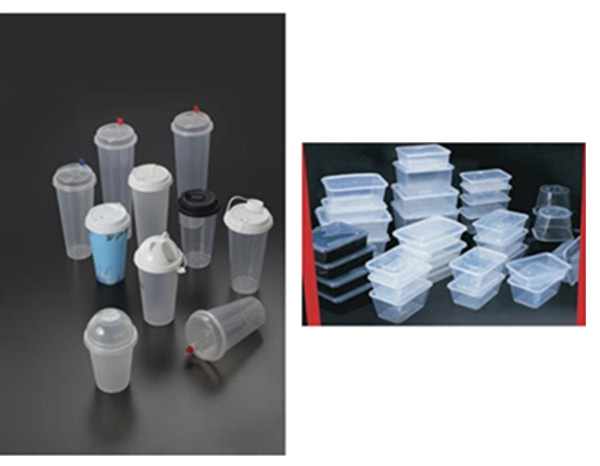
From an entrepreneur's perspective, energy consumption and temperature control are easily quantifiable and assessable indicators when customers select equipment. This allows for energy consumption comparison tests, recording the power consumption per unit product, and explaining the energy-saving logic in conjunction with the heat preservation performance of the infrared nano heating coil. For packaging plants, even if the energy-saving ratio fluctuates, as long as it remains stable during long-term continuous production, the accumulated energy consumption differences will be reflected in costs. Furthermore, faster heating means shorter startup waiting times, which is helpful for small-batch packaging orders that require frequent mold and material changes.
