

EN
When manufacturing high-quality PET preforms, every fraction of a millimeter and every second of cycle time counts. From injection molding to ejection, the stability of your machinery determines the quality of the final preform—and eventually, the blow-molded bottle.
One critical but often overlooked component in this process is the clamping unit. In particular, the direct pressure clamping unit with a stable ejection mechanism is becoming the gold standard for PET preform molding.
But why is this design so important? Let’s break it down.
What Is a Direct Pressure Clamping Unit?
Unlike toggle-type clamping systems that use a series of linkages to generate force, a direct pressure clamping unit uses a hydraulic or servo-driven piston to apply force straight onto the mold platen.
Key advantages include:
Even force distribution across the entire mold surface.
No mechanical wear points like toggle joints.
Faster mold protection response due to direct pressure sensing.
Why Stability in Ejection Is a Game-Changer for PET Preforms
PET preforms are long, thin-walled, and temperature-sensitive immediately after injection. The ejection phase—when pins push the preforms out of the core—is where many defects can occur: bending, scratching, or dimensional distortion.
A stable ejection mechanism ensures:
All ejector pins move together at the same speed and force, preventing tilted or stuck preforms.
No sudden shocks or uneven thrust. This protects the delicate neck finish (threads and sealing surface) of the preform.
Stable ejection allows faster ejection without damaging parts, helping you maintain high output without sacrificing quality.
Balanced ejection reduces uneven wear on ejector pins and mold plates.
When a direct pressure clamping unit holds the mold shut during injection and cooling, it ensures that the mold halves remain perfectly parallel. Once cooling is complete:
The clamp opens smoothly via direct pressure release.
The stable ejection mechanism activates, pushing preforms out in a controlled, linear motion.
The result? Preforms that are round, straight, and defect-free.
In contrast, toggle clamps can experience slight “snap” or uneven opening forces, which may lead to micro-movements during ejection—a disaster for thin-walled preforms.
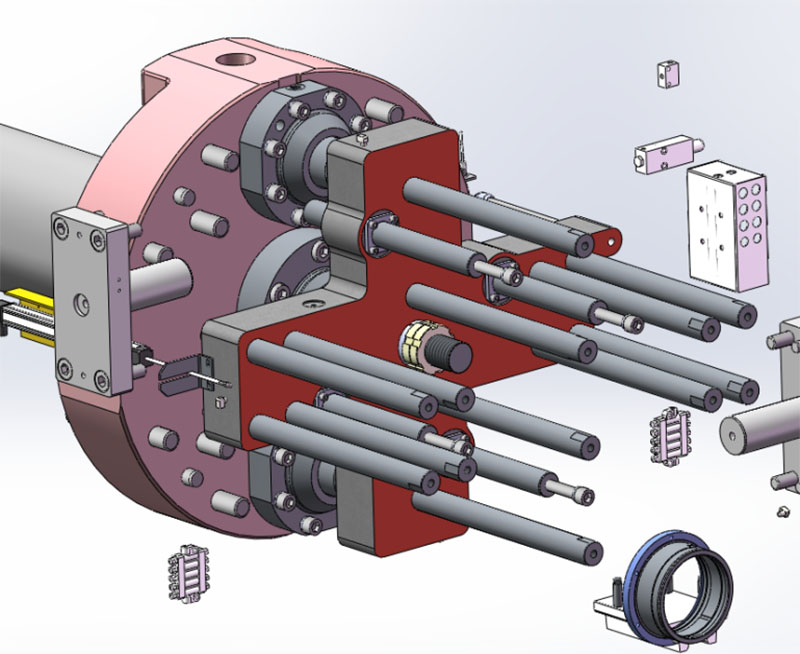
Real-World Benefits for PET Preform Producers
|
Feature |
Benefit |
|
Direct pressure clamping |
Uniform mold protection, less flash, lower maintenance |
|
Stable ejection |
Zero thread deformation, perfect preform concentricity |
|
Combined system |
Higher cavitation (e.g., 48–144 cavities) with consistent quality |
Industry Insight: Major PET preform mold makers now recommend direct pressure clamping for high-cavitation molds (96+ cavities) because even a 0.01mm ejection imbalance can ruin hundreds of preforms per cycle.
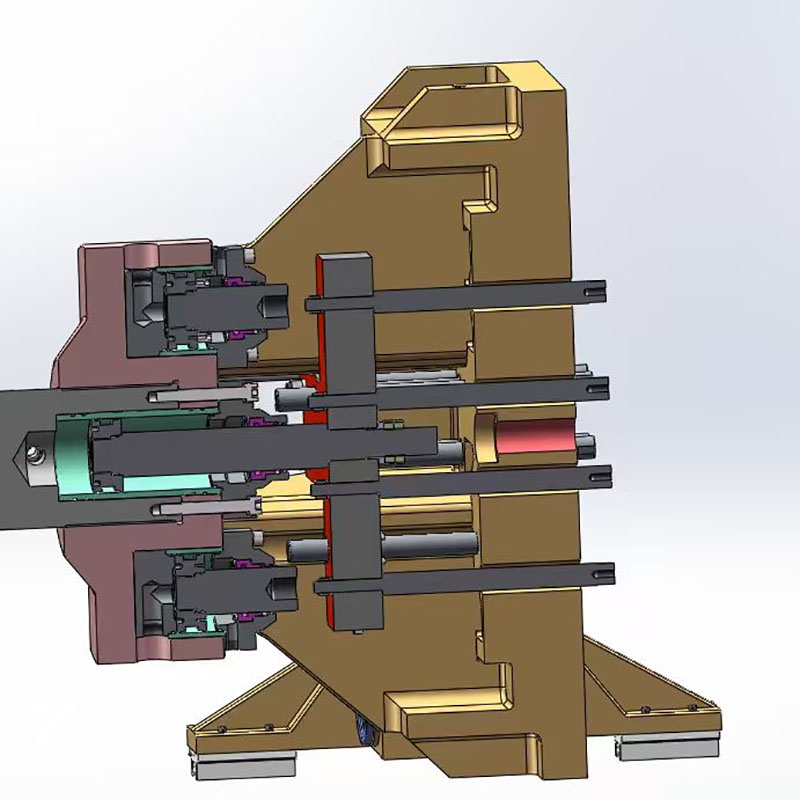
Whether you are producing water bottle preforms, carbonated soft drink (CSD) preforms, or hot-fill preforms, the stability of your clamping and ejection system directly impacts your bottom line.The direct pressure clamping unit with stable ejection mechanism isn’t just a technical specification—it’s the silent guardian of your preform quality.When evaluating injection molding machines for your next PET preform production line, always ask:
Does the clamping unit offer direct pressure? Is the ejection mechanism truly stable and synchronized?Your preforms—and your customers—will thank you.
