

EN
Anyone in the injection molding industry knows that deep-cavity products and molds have always presented significant challenges. Items such as buckets, storage bins, stools, and basins feature deep cavities, thick walls, and long demolding strokes, placing high demands on an injection molding machine's opening stroke and clamping stability.
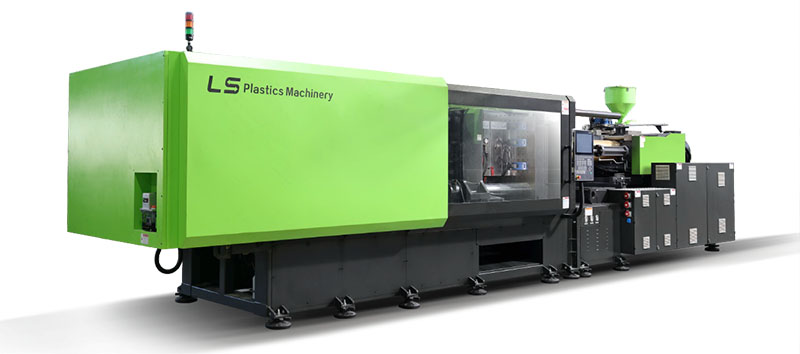
While bucket-style products—whether round or square—may appear simple and lacking in technical complexity, industry insiders know that molding them actually requires exceptional equipment capabilities. A deep-cavity structure necessitates a long mold-opening stroke; molding parts with high flow-length ratios requires substantial injection volume and clamping force; and the plasticizing characteristics of materials like PP and PE demand specialized screw designs. These products cannot simply be manufactured by tweaking the parameters on a standard, general-purpose machine. A noteworthy detail of Lisong’s direct-clamping technology is its use of thickened platens and a high-rigidity mechanical direct-locking structure. This setup achieves the required clamping force more efficiently, extending mold life, reducing energy consumption, and effectively protecting the mold. For customers, this design translates to less frequent mold maintenance and replacement—a practical consideration, especially given the high cost of molds.
Lisong’s mechanical direct-locking structure excels in this regard. The equipment ensures uniform and stable clamping force transmission and offers a generous mold-opening stroke, making it particularly well-suited for in-mold automation. For deep-cavity products, this allows for the design of deeper, more complex molds without worrying about stroke limitations. Additionally, the synchronized mold opening/closing and ejection function effectively shortens cycle times. For manufacturers of deep-cavity buckets or large storage bins, these design features are critical factors that directly influence production capacity and yield rates.
From a business owner's perspective, the advantage of a longer mold-opening stroke expands your potential customer base. Clients manufacturing deep-cavity products—such as industrial buckets, chemical containers, or large household goods—tend to be discerning about their equipment choices and are often reluctant to switch once they find a suitable model. This market segment offers high customer loyalty and attractive profit margins. Furthermore, Lisong’s mechanical direct-locking technology minimizes platen deformation—a feature particularly crucial for multi-cavity mold production. Since multiple cavities require precise positioning and uniform force distribution, the even clamping force provided by the direct-clamping system proves its worth in this context.
When explaining the value of the mold opening stroke to customers, distributors might find it helpful to break down the economics: a longer opening stroke accommodates deeper molds; deeper molds enable the molding of larger products in a single cycle; and larger products command higher unit value while requiring fewer downstream processing steps. Once this logic is clearly laid out, customers gain a more concrete understanding of the equipment's value.
