

EN
For manufacturers producing disposable lunch boxes, milk tea cups and fresh-keeping containers, many business owners hesitate over upgrading outdated conventional injection machines to professional high-speed thin-wall models. With substantial upfront equipment investment, they wonder how long it takes to earn back the cost.
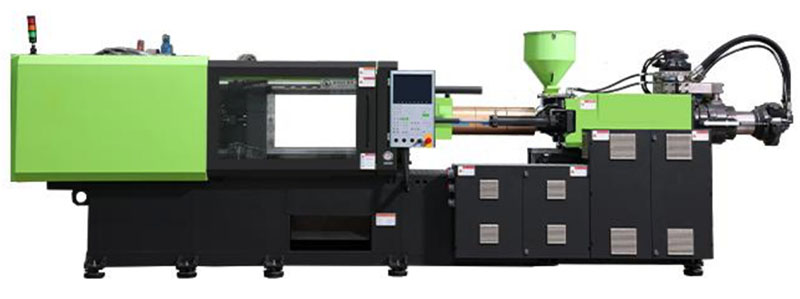
This article calculates real economic benefits based on three core profit drivers – boosted production output, lower electricity bills and reduced raw material waste – with actual production data of Lisong high-speed thin-wall injection molding machines, helping packaging plant operators visualize the real return on equipment upgrade.
Calculation Benchmark: Single machine running an 8-cavity PP lunch box mold; two-shift operation for 1 6 working hours per day, 3 0 0 working days per year. Comparison between old fixed-displacement pump standard injection machines and upgraded Lisong full-servo high-speed thin-wall machines.
1. Extra Net Profit from Increased Production Capacity (Core Source of ROI)
Performance of old conventional machines
Without accumulator-assisted high-speed injection, outdated equipment suffers slow cavity filling and sluggish mold movement. The full molding cycle for one lunch box averages around 6.5 seconds.Annual output of old machine: approx. 2 1.2 7 million pieces.
Performance of Lisong high-speed machine
Equipped with accumulator-driven high-speed injection and parallel plasticizing technology, Lisong shortens molding cycle down to 3.8 seconds.Annual output of Lisong machine: approx. 3 6.3 8 million pieces.
Annual incremental output: 1 5.1 1 million piecesBased on an average net profit of ¥0.0 1 2 per finished lunch box in the industry:Annual extra profit from higher output = 1 5.1 1 million × 0.0 1 2 ≈ ¥1 8 1,3 0 0
No extra workshop space or labor is required for the added production; excess capacity can take on outsourced processing orders during off-seasons for extra revenue.
2. Substantial Annual Electricity Savings via Servo Energy-Saving Design
Traditional fixed-displacement pumps run at full oil flow constantly regardless of load, causing excessive idle power consumption. Lisong’s full closed-loop servo hydraulic system supplies oil on demand, cutting power consumption by 2 5%~3 5% compared with standard machines (3 0% energy saving adopted for calculation).
Assumptions: Old machine consumes 3 2 0 kWh daily; industrial electricity price: ¥0.8 5/kWhAnnual power cost of old machine = ¥1 3 0,5 6 0Annual electricity savings after upgrade ≈ ¥3 9,2 0 0
The energy-saving advantage accumulates significantly under non-stop year-round mass production.
3. Raw Material Cost Cut via Lower Defect Rate
Unstable injection speed and pressure on legacy equipment frequently lead to incomplete filling, flash and warpage, bringing reject rate between 8%~1 2%.Benefiting from millisecond-level closed-loop control and high-rigidity clamping structure to eliminate flash, Lisong controls product reject rate below 1.5%.
Calculation premise: Annual PP raw material consumption: 1 2 0 tons, PP market price: ¥8,5 0 0/ton, reject rate drops by 8% annually.Annual raw material saving = 1 2 0 × 8% × 8 5 0 0 = ¥8 1,6 0 0
Raw material accounts for over 6 0% of overall production cost for thin-wall packaging. Less scrapped products directly slash expenditure, excluding hidden costs from reprocessing defective scraps.
4. Total Annual Return & Payback Period Calculation
Total annual comprehensive profit = ¥1 8 1,3 0 0 (extra output profit) + ¥3 9,2 0 0 (power saving) + ¥8 1,6 0 0 (raw material saving) = ¥3 0 2,1 0 0 per year
Assume the extra investment cost for upgrading to Lisong high-speed machine vs ordinary machine stands at ¥2 8 0,0 0 0:The incremental investment can be fully recovered within less than 1 2 months.With full-capacity peak-season order fulfillment, the payback period can be further shortened to 8~1 0 months.
Additional Hidden Benefits
1.Compatible with high-cavity molds such as 1 2-cavity tools, avoiding extra equipment purchase for future capacity expansion;
2.Lower equipment failure rate reduces downtime and production loss from maintenance;
3.Consistent product quality minimizes customer complaints and returned goods, helping manufacturers retain long-term bulk clients.
Conclusion: Upgrading to High-Speed Machines Is an Investment Rather Than Expense
Many factory owners regard new machine procurement as a heavy expenditure, but cost breakdown proves that Lisong high-speed thin-wall injection machines deliver fast payback via higher yield, lower power bills and less material waste.
Facing rising raw material & labor cost plus fierce market competition, relying on outdated equipment leads to shrinking profit margins. Upgrading to dedicated high-speed thin-wall injection equipment is the most reliable investment for packaging factories to cut cost and strengthen market competitiveness.
