

EN
In PET preform injection molding, the screw is the heart of the barrel. It determines plasticizing quality, injection speed, and cycle time. Today, we compare two architectures: the Independent Dual-Screw (Separate Plasticizing + Injection) — often referred to as the "Twin-Screw Injection System" — versus the conventional Single-Screw system.
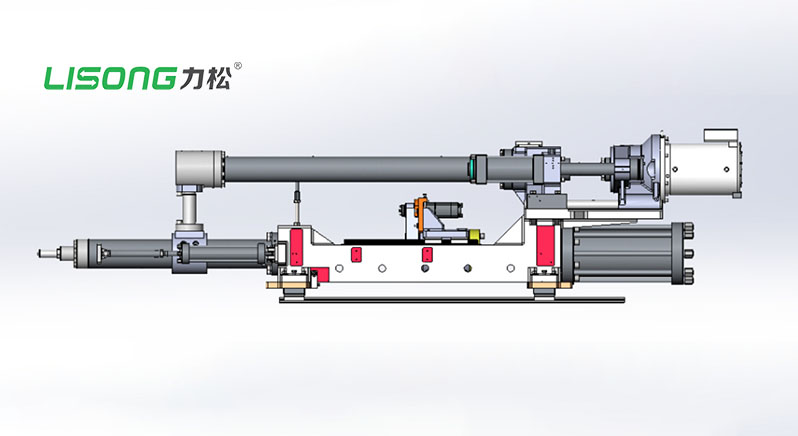
System Architecture
● Independent Twin-Screw Injection System
Composed of two independent screws working together.
Screw 1 (Plasticizing Screw): Responsible for material conveying, compression, melting, melting and degassing. It continuously melts the PET resin.
Screw 2 (Injection Screw): Responsible for melt metering, storage, and high-speed injection.
● Single-Screw System
One screw performs three functions: plasticizing, metering, and injecting interchangeably.
How They Work: Serial vs Parallel
Independent Dual-Screw (Twin-Screw System)
Operation: Plasticizing and injection happen simultaneously (in parallel) . While the injection screw is shooting one shot into the mold, the plasticizing screw is already preparing the next shot.
Cycle Impact: Zero waiting time. The overall molding cycle is the longer of (injection or plasticizing) , not their sum.
Single-Screw System
Operation: Plasticizing and injection happen sequentially (one after the other) .
Inject⟶ Hold pressure⟶ Wait for cooling⟶ Plasticize ⟶ Repeat.
Cycle Impact: Plasticizing time adds directly to the cycle time. This is a major bottleneck for high-speed PET production.
The "Simultaneous Action" Advantage
Independent Dual-Screw System:
Because the plasticizing screw continuously feeds a reservoir in front of the injection screw, the machine can plasticize while injecting. This alone shortens the overall molding cycle dramatically, directly translating to higher output per hour (kg/hr or cavities/hr).
Single-Screw System:
The screw must stop rotating during injection. After the mold fills, the screw waits for cooling to finish, then turns to plasticize the next shot. This sequence adds seconds to every cycle. For thin-wall PET preforms with short cooling times, single-screw plasticizing becomes the speed-limiting step.
Plasticizing & Mixing Quality
● Independent Dual-Screw:
The plasticizing screw is designed purely for melting, compression, mixing, and degassing.
Low plasticizing temperature minimizes PET degradation and acetaldehyde (AA) generation.
Excellent mixing ensures uniform melt temperature and viscosity across the entire shot.
● Single-Screw:
Limited L/D ratio and mixing sections.
Poor dispersion leads to unmelted particles or inconsistent melt temperature.
Hard to achieve low-temperature plasticizing without risking incomplete melting.
Conclusion
For high-speed, high-quality PET preform molding:
● Independent Twin-Screw Injection System= Higher output, lower cycle time, superior melt quality (uniform, low temperature, well-degassed), and consistent shot weight.
● Single-Screw = Compromised mixing, no simultaneous operation, longer cycles, and limited injection repeatability.
If you request faster production cycles, lower AA content, and bottle-grade wall thickness consistency, choose a PET injection molding machine with independent twin-screw (plasticizing + injection) technology.
