

EN
The plastic household goods industry has long moved beyond the era of "extensive, low-volume mass production." Today's products—such as water bottles, basins, storage boxes, tableware, daily chemical packaging, and small household items—characterize an industry marked by rapid product design updates, thin profit margins per unit, large order volumes, stringent aesthetic requirements, and short delivery cycles. Traditional injection molding machines, however, suffer from slow production cycles, poor stability, high energy consumption, and persistently high defect rates, making them inadequate to meet the profitability and delivery demands of modern household goods manufacturing facilities.
Leading manufacturers across various industries and foreign trade exporters are gradually phasing out conventional injection molding machines in favor of a comprehensive upgrade to the Lisong Pro Series high-speed specialized injection molding machines. These high-speed machines are no longer merely "optional accessories" but have become essential equipment for the large-scale, high-profit, and standardized production of plastic consumer goods.
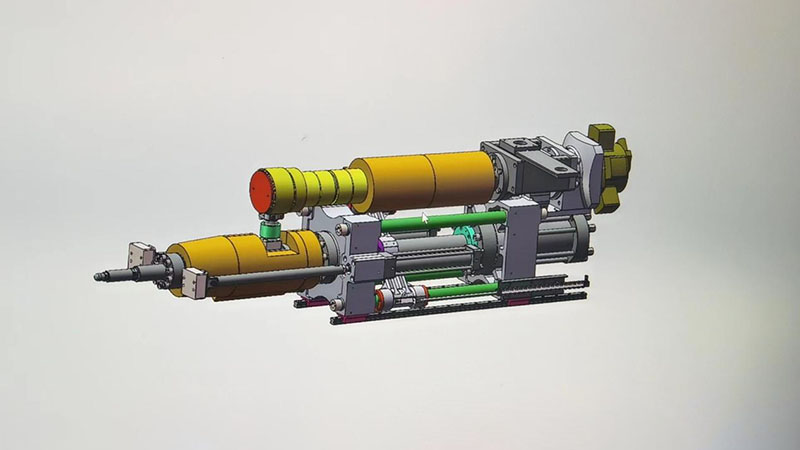
I. Industry Overview: In the production of consumer goods, speed and yield rate are decisive factors.
Plastic household goods fall under the category of high-volume, low-margin products; therefore, factories do not rely on product-specific premium pricing to generate core profits, but rather on scaled-up production capacity, extremely low defect rates, low energy consumption costs, and reliable delivery consistency. Traditional conventional injection molding machines suffer from four major critical limitations: long molding cycles, significant wall thickness variations, inadequate surface finish quality, and substantial fluctuations in mass-production parameters over time.
In particular, for foreign trade orders and supermarket supply chain orders, the requirements regarding products—such as no burrs, no shrinkage, no color variation, and consistent dimensions—have become increasingly stringent. Conventional machine models are highly susceptible to batch-level defects, which can lead to returns and cost deductions or rework expenses; while these machines may appear to have lower equipment costs, their overall production costs are actually higher and their profit margins are lower. This is a key reason why the industry is becoming increasingly dependent on specialized high-speed machines for mass production.
II. Lisong Pro Series High-Speed Machines – precisely addressing the core challenges in mass production of daily consumer goods
1. Ultra-fast manufacturing cycle – directly doubles production capacity and secures the initiative in securing orders
The Lisong Pro Series is a fully upgraded high-speed servo-driven machine designed specifically for processing thin-walled or standard-thickness household goods. It features an optimized end-to-end workflow—including mold opening/closing, injection molding, pressure holding, and cooling—eliminating the drawbacks associated with traditional machines' sluggish movements and delayed transitions, resulting in faster overall machine response times and smoother operation switching. Compared to conventional injection molding machines, the unit molding cycle is shortened by 20%–35%, while production capacity is significantly increased within the same timeframe.
For high-frequency mass-production products such as water bottle lids, thin-walled tableware, small household items, and bucket accessories, the Pro Series high-speed machine enables stable, rapid cyclic mass production; its daily and monthly output capacity significantly exceeds that of conventional machines. Without the need for additional equipment or workforce expansion, this machine can handle larger batch orders, making it perfectly suited to the production demands associated with peak seasons for consumer goods or concentrated overseas export deliveries.
2. High-precision stable forming process ensures consistent quality across all batches and eliminates post-sale wear and tear.
Common quality issues encountered in everyday consumer products—such as surface shrinkage or dents, burrs or rough edges, uneven wall thickness, color variation between batches, or inconsistent assembly tightness—are often caused by insufficient precision in equipment's pressure, speed, and temperature control. The Lishong Pro Series high-speed machines feature an upgraded high-precision servo-proportional control system combined with an intelligent closed-loop electrical control system, enabling precise regulation of injection speed, injection pressure, and hold-pressure parameters, along with exceptional repeat positioning accuracy.
Whether manufacturing large quantities of storage bins, plastic containers, or household ware, or producing small items for thin-walled packaging, we ensure that all products maintain a clean appearance, meet standardized dimensions, are free from shrinkage or flash, and exhibit exceptional batch consistency – perfectly meeting the stringent quality inspection requirements of supermarkets and international export markets. This approach reduces the defect rate at the source, eliminates the need for rework, and prevents losses arising from order compensation claims.
3. High-speed operation with constant stability – 24/7 uninterrupted high-intensity mass production
A common misconception among many manufacturers is that high-speed machines, due to their high operating speeds and substantial pressure, are more prone to failure and exhibit poorer stability. The Lisong Pro Series completely addresses this issue; it features a highly rigid, thickened chassis, reinforced mold structures, and a thicker rod assembly design, providing enhanced structural load-bearing capacity, superior fatigue resistance, and greater resistance to deformation – making it specifically engineered for 24-hour continuous mass production operations in consumer goods manufacturing facilities.
The equipment operates at high speeds without vibration or parameter drift; even during prolonged day-and-night mass production cycles, its performance remains stable – preventing any increase in instability or a surge in defective products as production volume rises. All core structural components, electrical control systems, and servo accessories are sourced from leading brands, ensuring an extremely low failure rate, significantly reducing downtime for maintenance, and guaranteeing the continuous operation of the production line – ensuring that factories maintain full production capacity and uninterrupted output throughout peak seasons.
4. Higher speed with greater energy efficiency – reduces production-related electricity costs and increases net profit.
The production of daily consumer goods operates under an uninterrupted year-round mass-production model, where energy consumption and electricity costs represent the largest portion of production-related expenses. The Lisong Pro series is equipped with a next-generation energy-efficient servo power system that delivers power on demand – featuring low idle power consumption and high efficiency under load. Compared to conventional fixed-displacement pump models or older servo-based systems, this solution achieves a total energy savings of over 30%.
High-speed molding reduces overall machine runtime and minimizes unnecessary energy consumption; while doubling production capacity, it avoids additional electricity costs. Long-term large-scale production enables factories to save significant operating expenses, which can be directly converted into net profit for the enterprise – thereby providing a comprehensive solution to the industry-wide challenge of "the higher the production capacity, the greater the electricity cost burden."
5. Compatible with a wide range of daily-use products – versatile design catering to diverse market demands.
The daily consumer goods market is characterized by rapid product iteration, a wide variety of product categories, numerous small-order batches, and frequent style changes. The Lisong Pro Series high-speed machines offer exceptional compatibility, enabling seamless adaptation to the production of all types of plastic consumer goods – including thin-walled small items, thick-walled containers and basins, rigid household items, soft rubber accessories, and packaging products.
The equipment features a built-in parameter memory function that allows users to retrieve established parameters with a single click when changing molds or product models – eliminating the need for repeated manual adjustments and significantly reducing product model debugging time. This design is ideal for factory production environments characterized by diverse product categories, small batch sizes, and rapid product iteration cycles, thereby maximizing equipment utilization and preventing idle equipment waste.
III. Industry Trends: High-speed machinery represents a critical profitability requirement for consumer goods manufacturing facilities.
The plastic consumer goods industry is experiencing intensifying competition, characterized by severe price-driven market rivalry; to stand out in this environment, manufacturers must rely on higher production capacity, more consistent product quality, and lower operating costs. Conventional machinery can only barely sustain production – it cannot help factories enhance quality and efficiency or secure high-end orders. In contrast, the Lisong Pro Series high-speed machines provide comprehensive support for manufacturing across all dimensions: production capacity, product quality, cost efficiency, system stability, and adaptability.
Leading manufacturers are upgrading their high-speed production equipment—not out of mere trend-following, but to leverage their equipment advantages to widen the gaps in production capacity, product quality, and profitability. Outdated equipment characterized by low speed, inefficiency, and high energy consumption will only plunge factories into a vicious cycle of low profit margins, high risks, and difficulty securing orders.
